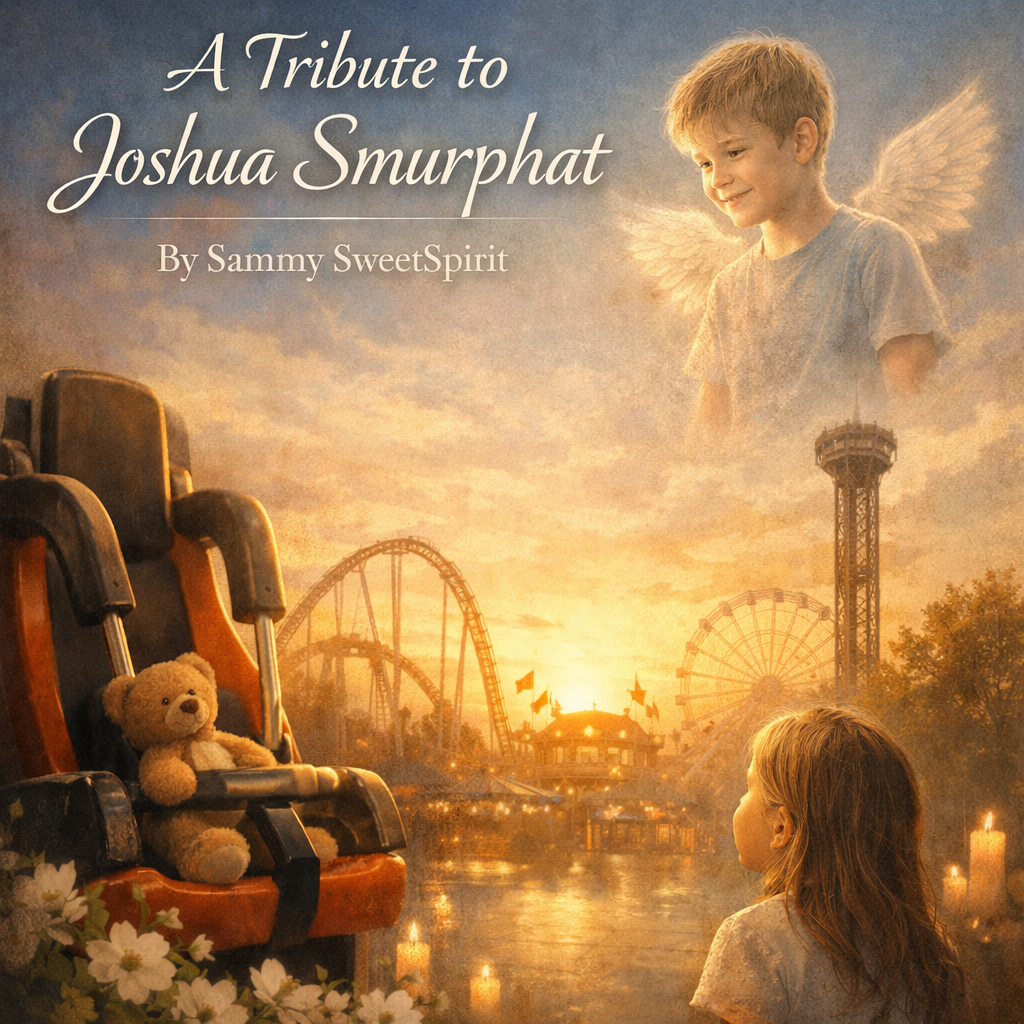
In my last essay, I wrote about an experience when I was ten years old where I felt treated differently because of my blindness. This story is about another moment from that same year—one that shaped me in a very different way.
The date was Sunday, August 22, 1999.
My parents, another couple who were friends of theirs, and I were heading to an amusement park for the day: Paramount’s Great America in Santa Clara, California. I loved Great America. I used to go there with my grandma every time I had a weekend with her. I’m a thrill seeker, so roller coasters have always been my favorite. Going fast, going upside down—I loved it all.
I remember the morning clearly. I woke up, had breakfast, and watched an episode of my favorite show, South Park, which I had recorded the night before. It’s still my favorite show to this day. I even remember the exact episode.
Soon we were on our way.
The day unfolded like the perfect summer adventure. We rode roller coasters and other rides, played carnival games, and threw water balloons. Because I’m blind, we were often allowed to enter rides through the exit instead of waiting in long lines. It felt like the whole day was built around joy and laughter.
I still remember the sound the water balloons made when they burst on the sidewalk—a sharp, wet pop followed by a splash.
For a while, everything was pure fun.
One of my favorite rides was called the Drop Zone. It would shoot you up 124 stories into the air, pause for a moment at the top, drop you slowly in something that felt almost like a free fall, and then plunge the rest of the way down at full speed. I loved that ride.
But that time was different.
For some reason, we couldn’t go through the exit. We had to wait in line like everyone else. We stood near the ride, waiting for the previous group to finish their turn.
Then something happened.
Everyone saw it—except me.
Suddenly my dad scooped me up and started running. He didn’t lift me very high, almost as if he could barely hold me while we hurried away. We just had to get out of there. Later, when my mom recounted the moment, she said my dad looked as white as a ghost.
And then I heard it.
It was a sound I will never forget. It reminded me of the water balloons from earlier that day, but much louder—like a massive balloon hitting the ground.
Only it wasn’t a water balloon at all.
I asked my dad what had happened.
He said a guy had just fallen off the ride. To him, it looked like a guy—but he was actually a boy.
I immediately burst into tears.
Panic spread everywhere—people screaming, chaos unfolding around us. I remember hearing a man crying out and throwing himself against a wall. Later I learned he was the boy’s stepfather.
Two girls who had been riding with the boy were sitting nearby. They were crying. One of them was holding a stuffed animal. I tried to hug her, but she didn’t want a hug in that moment.
I understood.
We all understood that something was terribly wrong.
The boy’s name was Joshua Smurphat. He was twelve years old. Joshua had spina bifida and developmental delays. The girls riding with him were people he had just met that day.
Investigators later determined that Joshua had slipped out of the ride’s shoulder harness while the drop-tower ride was about 50 to 100 feet in the air and fell to the concrete below. When the ride returned to the ground, the safety harness was still locked. The exact cause of how he slipped out was never fully determined, though investigators believed his spine may have broken when the ride jerked to a stop at the top of the tower.
Joshua was just a carefree boy who wanted to have fun at an amusement park.
Instead, he lost his life.
The tragedy sent shockwaves through the community. I remember that my mom and I went to grief counseling afterward. My mom never returned to Great America again.
I did.
In fact, I went back several times over the years, and I even rode the Drop Zone again. After the accident, the park added new safety features. What had once been only a shoulder harness now included both a shoulder harness and a lap bar.
But the biggest change didn’t happen at the park.
It happened inside me.
The experience led me to start asking the big questions about life. That very night after the accident, I remember lying awake, unable to sleep. I went to my mother and began asking her questions that felt enormous for a ten-year-old mind.
Why do we die?
Why are we here?
She shared with me the belief system she holds, one that I still carry today. She told me that each of us comes here with a mission. When that mission is fulfilled, we return home to where we came from.
As a child, I thought about Joshua and wondered what his mission could possibly have been. At ten years old, I couldn’t begin to understand it.
Looking back now, I can make a guess.
Maybe he was here to show the world disability—to help people understand it a little more. Maybe he was here to be a kid who laughed, rode rides, and embraced life for the time he was here. And maybe, in doing that, he was teaching the rest of us how to live more freely.
Maybe his life, and even his death, caused people to ask deeper questions about safety, compassion, and the fragility of life.
Some experiences shape us in ways we don’t fully understand at the time.
This was one of those experiences for me.
It was the moment when a carefree day at an amusement park turned into something else entirely—something that made a ten-year-old girl begin asking the biggest questions of all.
Questions about death.
And questions about life.