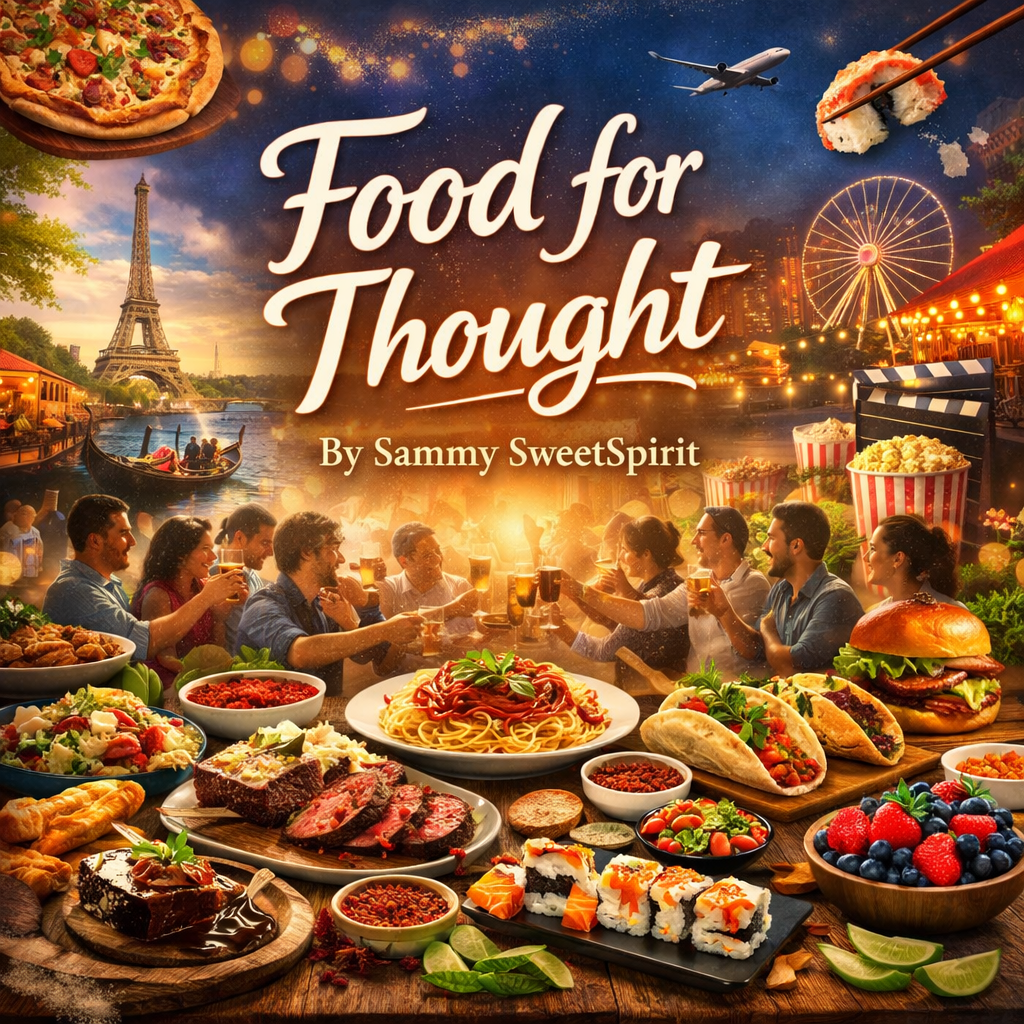
One of the most defining things about me is how much I love food. I get genuinely excited about it—the anticipation of its arrival, the first aroma, the first bite. I love bold flavors, layered textures, creative seasonings, and dishes from all over the world. Food, to me, is an experience.
My friends get a good laugh at how animated I become when the topic turns to what’s on the plate. We could talk about food all day if we let ourselves. In fact, we often do. One of the first things we ask each other is, “What did you eat?” as if it’s headline news. And honestly, to me, it is.
But it wasn’t always that way.
As a child, I was one of the pickiest eaters you could imagine. I didn’t like chicken. I didn’t like steak. I didn’t like vegetables or fruit. My acceptable menu was painfully small: chicken nuggets, spaghetti, cereal. And then there was cheese—especially cheese. Grilled cheese sandwiches. Quesadillas. Mac & cheese. Pizza. If I had a corn dog, I preferred the cornmeal coating more than what was inside. Eating felt like a chore. It interrupted playtime. It was boring. It was the last thing I wanted to do.
Somewhere along the way, that changed.
Now, food soothes my soul. It comforts emotional aches. It celebrates joy. It connects me with people. When I’m happy, food is there to celebrate with me. When I’m sad, it sits beside me in quiet understanding. That may sound overly emotional—maybe even like I’m living to eat—but it’s really about appreciation. It’s about flavor, about culture, about connection.
A friend once told me that when I describe a dish, it’s almost like he’s sitting there eating it himself. Even if he isn’t sure he would like what I’m talking about, the excitement in my voice makes him want to taste it. That meant more to me than he probably realized. Food, for me, isn’t just something I consume—it’s something I share through description, through enthusiasm, through storytelling.
When you look around, food is part of almost every moment we share. When we gather with friends, there’s usually food involved. When we make plans, one of the first questions is, “Where are we going to eat?” Food shows up at sporting events, concerts, amusement parks, movie theaters, and of course, restaurants. It’s part of our celebrations, our traditions, our everyday rhythms.
I went from being extremely picky to being wide open. Well—mostly wide open. There are still a few things I don’t enjoy: black olives, bell peppers, cabbage, broccoli. But what I love far outweighs what I don’t.
What do I love now?
I love chicken, steak, lamb, seafood, sushi, and poke.
I love dessert—anything chocolate or peanut butter especially.
I love fruit: berries, peaches, grapes.
The more seasoned, the better.
I love mushrooms, garlic, and onions.
I love American, Mexican, Chinese, Thai, Indian, Greek, and Mediterranean cuisine.
My enthusiasm for food has even had consequences. I developed diabetes, in part because of how deeply I love to indulge. That reality has forced me to think more carefully about balance—but it hasn’t diminished my appreciation.
Food truly brings people together. Sit a group of individuals at one table—people with different beliefs, religions, races, and backgrounds—and give them something they all enjoy eating. In that moment, you’ve created common ground. A shared bite can soften barriers.
Comedian Trevor Noah once joked in his Netflix special Son of Patricia that if someone is against immigration, they should stop eating other cultures’ food. He has a point. Our plates tell the story of global influence. Another comedian, Jim Gaffigan, can build an entire routine around food, and audiences everywhere nod in recognition. We relate because food is universal.
There’s also the Netflix series Somebody Feed Phil, starring Phil Rosenthal, the creator of Everybody Loves Raymond. In the show, Phil travels the world tasting dishes from different cities and countries. He meets locals, listens to their stories, learns about their culture, and shares meals at their tables. What I love most is his childlike joy. When he takes a bite of something extraordinary, he lights up. He giggles. He beams. That’s how I feel about food too. It’s discovery. It’s delight. It’s connection.
And yet, for all the joy food brings, there’s a painful reality: many people go hungry. In a world with so much abundance, that’s heartbreaking. The amount of food thrown away each day is staggering. No one should have to wonder where their next meal is coming from.
Food brings us together. It sustains us. It tells stories. It bridges differences. It comforts, celebrates, and nourishes both body and soul.
Now, the real question is—what are you going to eat?